Why Wealth Disparity Enables GBV Impunity in South Africa
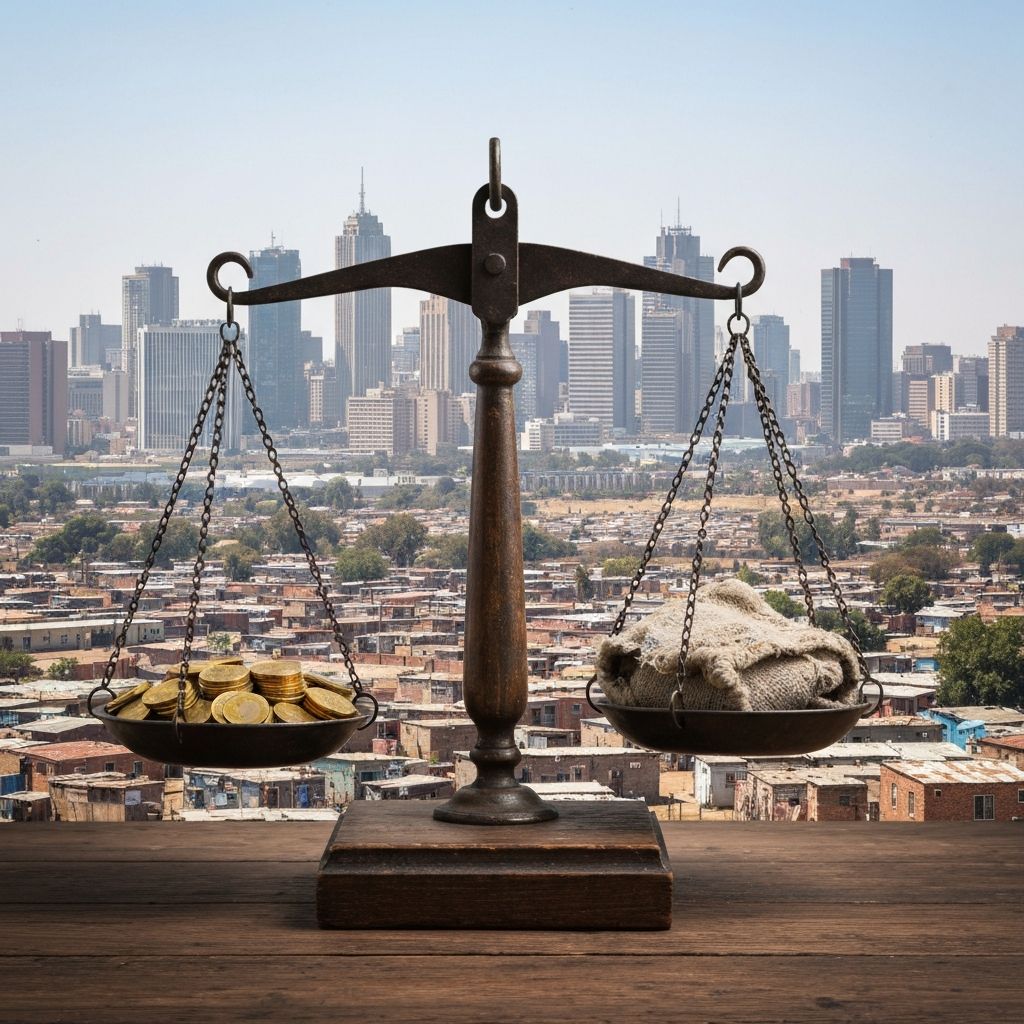
A killing in Sandton once again shines light on what many already know but dare speak of - the way deep economic divides shape who faces justice and who does not. Gender-based violence spreads because some perpetrators move through life unshadowed by consequence. As each year ends with more than 5,500 women lost, the truth goes beyond any single act of horror. Where money protects influence, accountability wavers, feeding cycles of harm that reach far past any single crime scene.
The Geography of Justice
Across South Africa, where you live shapes how quickly justice shows up. In wealthy areas, guards rush within short minutes when danger strikes. But in crowded settlements without proper services, people beg for aid that never comes. That uneven split between neighborhoods leads scientists to name them "safety deserts." Inside these spaces, attackers sense they're being watched less closely.
Working tough shifts, the South African Police Service faces serious limits on supplies and staff. In high-end neighborhoods, stations often run with proper deployment, reliable cars, plus updated labs for evidence analysis. On the flip side, outlets in poorer zones cope with too few officers on duty, faulty tools, while cases pile up - sometimes never investigated beyond a few weeks. What stands out isn't random chance - it grows from years of uneven development, where power shaped space so that wealth piled up in favored zones, leaving behind Black and Coloured neighborhoods with far less support.
Economic Power as a Shield
From behind closed doors, wealth opens doors to quiet escapes ordinary people never see. Delayed trials unfold when skilled lawyers twist rules, wearing down overwhelmed courts with endless motions. In courtrooms meant to be quick and fair, richer defendants turn payment records into proof of trust. Meanwhile, those who can't afford a lawyer sit months waiting in packed holding centers for far fewer crimes.
Hiring outside investigators, analysts, or spin specialists tips the scales in court battles - more money often means better outcomes. Instead of just explaining actions, teams may twist testimony, build new stories, influence viewers long before a judge enters the room.
The Silence Money Can Buy
What's often just as harmful as clever legal moves is how money silences people left behind. With jobless rates stuck close to one out of every three citizens, fear of losing work - or rent, or licenses - keeps many quiet. Secret deals backed by cash payouts build walls around truth, protecting those who've committed serious acts. Silence grows when rewards go to staying quiet rather than speaking up.
When someone in power speaks up, lives are turned upside down. Families who rely on wealthy neighbors might lose more than income - they could lose everything. Dependence creates silence, where reports should echo. Fear of financial ruin wraps around courage, making truth difficult to share. Hidden harm grows stronger each time silence wins.
Institutional Capture and Regulatory Failure
Power shifts quietly in South Africa's institutions, where money bends rules without force. Donations shape decisions, ties to companies whisper warnings, friendships hint at outcomes. These unseen layers often weigh more than titles or laws. When probes target high-status figures, coercion slips past records - a call from someone who's known forever, shared ventures that blur loyalty, unspoken norms about status and access.
Facing limited funds isn't the only hurdle for the National Prosecuting Authority - what often follows is pressure shaped by politics, especially when targets are rich or influential. Workers tackling complex matters sometimes find their careers shifted, budgets slashed, or silence expected, blocking full probes. No bribery needed; silence takes root quietly, guided by how far officials believe they can go without sparking backlash.
The Media's Dual Role
Headlines often echo who holds power in society. Stories about wealthy families lose little detail - they fill front pages, spark debates, stay under lights. Meanwhile, lives from poorer neighborhoods slip past cameras just as fast, buried where readers rarely see them. What stands out goes beyond how newsworthy something is - it ties back to how newspapers make money, especially from ads aimed at rich clients and big advertisers.
Should a perpetrator come from money and influence, attention in the press might move from the brutality done to women toward questions about how the legal system operates - so delays and fine points in procedure start looking less like delays in justice, more like proper procedure. This shift paints fairness for the accused as the main goal, especially when compared to those without resources standing trial for identical acts. Survivors' claims often get placed beside the defendant's rights, an imbalance that hardly ever shows up when it comes to less fortunate individuals charged with similar crimes.
Technology and the Digital Divide
Digital activism and social platforms now offer fresh paths for holding people accountable. Still, money differences among citizens affect results just as much. Well-off offenders often pay firms to manage their public image. Legal attacks under false pretenses become tools to shut down voices online. Fear of costly court fights keeps critics quiet when funds are uneven. Negative posts vanish fast where payment clears the way. Stories opposing truth gain ground if money backs repetition. Lone activists face endless cycles without support behind them.
Still, those who made it through from poorer neighborhoods might not have the skills, tools, or internet access needed to put their experiences online. Their stories rarely go viral, grab widespread support, or spark demands for change from officials. Without equal access to technology, economic gaps quietly strengthen the ability of powerful actors to act without consequences.
The Privatization of Safety
South Africa's bifurcated safety landscape—private security for the wealthy, under-resourced public policing for everyone else—creates fundamental injustice in GBV prevention and response. Women in affluent areas have panic buttons, armed response, and neighborhood watch networks. Women in townships navigate dangerous commutes, poorly lit areas, and minimal police presence while facing statistically higher rates of violence.
This privatization doesn't just create unequal protection—it allows those who can afford safety to opt out of demanding systemic reform. When your security is handled privately, the dysfunction of public institutions becomes someone else's problem. This fracturing of shared stake in public safety undermines collective pressure for change.
Breaking the Cycle
Addressing how wealth disparity enables GBV impunity requires confronting uncomfortable truths about South African society. It means acknowledging that our justice system doesn't fail equally—it's designed, through decades of deliberate and neglectful policy choices, to serve some communities while failing others.
Reform must go beyond individual prosecutions to address structural inequalities. This includes equalizing police resources across geographic areas, implementing strict oversight on prosecutorial decision-making in high-profile cases, closing legal loopholes that enable delay tactics, and creating genuine consequences for those who use economic power to obstruct justice.
It requires media organizations to examine their coverage patterns and commit resources to reporting GBV cases regardless of victims' socioeconomic status. It demands that civil society organizations working on GBV receive adequate funding to support survivors through lengthy legal processes and challenge institutional failures.
Most fundamentally, it requires South Africans to reject the notion that justice can be a commodity available only to those who can afford it. The femicide crisis affects women across all economic strata, but impunity clusters where wealth and power concentrate. Until we dismantle the mechanisms through which economic privilege translates into freedom from consequences, we cannot claim to be serious about ending gender-based violence.
The recent Sandton case has brought national attention to these systemic failures. The question is whether this moment will catalyze genuine reform or fade into the pattern of outrage without action that has characterized South Africa's response to GBV for too long. The answer will reveal whether we're committed to equal justice or merely to the performance of it.
South Africa's fight against GBV requires more than awareness—it demands systemic change that dismantles the economic barriers to justice. Only by confronting how wealth enables impunity can we build institutions that protect all women equally, regardless of their postal code or economic status.
Share on Social Media
Why Wealth Disparity Enables GBV Impunity in South Africa
Deep economic divides shape who faces justice and who does not. Where money protects influence, accountability wavers, feeding cycles of harm. Understanding this connection is crucial to addressing South Africa's femicide crisis.
Read more at
lilacvenus.co.za

Click the download button to save this post for Instagram (1080x1350px)